
Dubai Real Estate 2026: Why the Market Correction Is Your Buying Opportunity
By The Eight Co. | April 2026 | 10 min read | UK Property Investment
The Headline Everyone Missed
In March 2026, headlines screamed "Dubai Real Estate Market in Freefall." Stock indices plummeted. Social media erupted with comparisons to the 2008 crash. Investment forums filled with panic.
But here's what separates savvy expat investors from reactive traders: the difference between a stock index crash and an actual property market crash.
If you're considering Dubai real estate investment or already nervous about existing holdings this article cuts through the noise and explains exactly what's happening beneath the headlines.
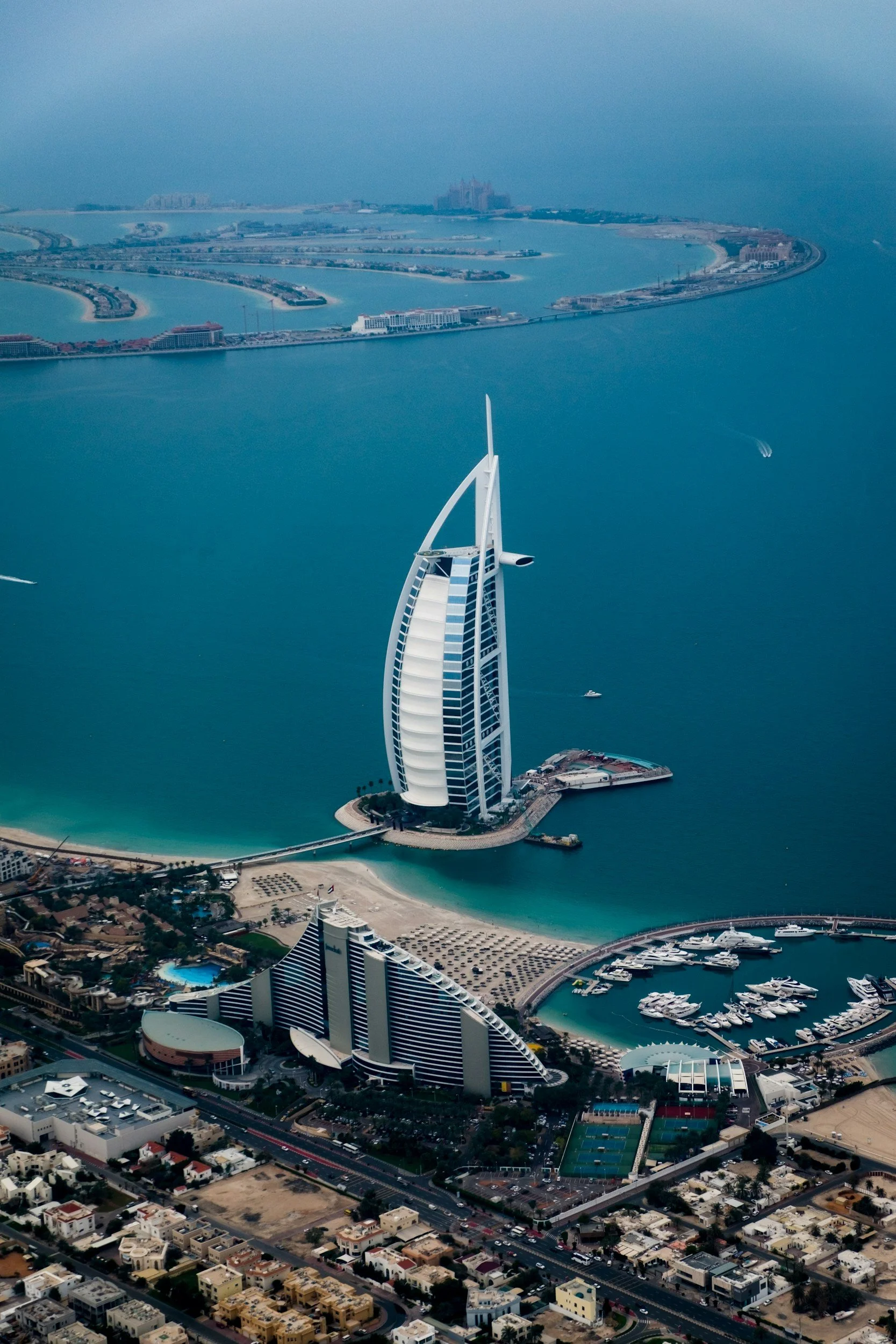
What Actually Happened: The Facts vs. The Fear
The Real Numbers
In 2025, Dubai's real estate market set all-time records:
AED 917 billion ($250 billion) in total transactions
Over 270,000 property deals closed in a single year
60-75% price appreciation since 2021 across residential segments
87% of purchases were cash transactions (not leveraged speculation)
Then in late February 2026, geopolitical tensions in the region triggered a market correction.
What Tanked (And What Didn't)
The Stock Market: The Dubai Financial Market (DFM) Real Estate Index—which tracks listed developers like Emaar and Damac—fell approximately 30% in two weeks. This is a stock market event driven by investor sentiment and risk repricing.
The Property Market: Actual residential and commercial property prices have remained relatively stable. Transaction volumes dropped approximately 30% in March, but this reflects slower deal-making, not price collapses. Early data from April 2026 shows activity resuming as geopolitical tensions ease.
This distinction is critical: When stocks fall 30% overnight, it signals panic. When property market activity slows 30% over a month, it signals caution—which is temporary.
Why Dubai Isn't 2008 (And Why That Matters)
Investors with longer memories are justifiably nervous. The 2008 financial crisis devastated Dubai:
Property values crashed 50-60%
Construction halted on half-built towers
Expatriates fled in such numbers they left luxury cars abandoned at airport terminals
The emirate took years to recover
So why is 2026 fundamentally different?
Market Structure: Then vs. Now
2008 Market Characteristics:
Driven by leveraged speculation and short-term flipping
Off-plan purchases by investors betting entirely on continued price appreciation
Weak regulation; no escrow protections for buyers
Highly concentrated investor base (mostly wealthy locals and speculators)
Transaction-driven, not fundamentals-driven
2026 Market Characteristics:
70% of transactions driven by end-user demand (people buying to live there)
87% cash purchases (minimal leverage risk)
Robust regulatory framework with escrow protections
Diversified global investor base (60% international investors; India represents 20-22% of foreign purchases alone)
Strong population growth (from 3 million in 2008 to 4.2 million in 2026)
Healthy developer finances and stable lending standards
The bottom line: 2026's Dubai market is structurally sound. It's experiencing a sentiment shock, not a systemic collapse.
The Real Headwinds (And Why They're Temporary)
Let's be honest about the legitimate risks facing Dubai property investment right now:
1. Tourism-Dependent Markets Face Short-Term Pressure
Dubai's economy relies heavily on tourism and short-term rentals (Airbnb-style investments). If regional instability persists, visitor numbers could fall, reducing occupancy rates for hospitality-focused properties.
Reality check: Long-term rental yields (6-9% annually, among the world's highest) are primarily driven by permanent resident demand, not tourism. The expatriate workforce that sustains long-term housing demand remains largely unaffected.
2. Off-Plan Market Is More Vulnerable
Approximately 65% of 2025 transactions were off-plan purchases. When sentiment turns negative, off-plan buyers (particularly international investors) can become hesitant, potentially creating supply pressure in 2027-2028.
What savvy investors do: Focus on completed, fully-occupied properties with established rental income rather than speculative off-plan units.
3. Supply Pipeline Coming in 2026-2028
Approximately 210,000 new housing units are expected to complete over the next two years—roughly double the three-year average prior to 2025. This could create downward price pressure, particularly in the mid-market segment.
Why this isn't a disaster: Dubai has consistently absorbed large supply pipelines when demand fundamentals are strong. The key metric is whether population growth and expatriate inflow continue—and they are.
4. Geopolitical Overhang
The Iran-US situation creates genuine uncertainty that could affect investor confidence if escalation occurs.
Current trajectory: Recent ceasefire announcements are stabilizing sentiment, and early 2026 activity data shows renewed confidence as tensions ease.
The Opportunistic Case: Why Smart Investors Are Buying Now
Here's what a 30-year property investment history teaches you: The best acquisitions happen during periods of temporary sentiment-driven weakness, not during euphoric bull markets.
Window of Opportunity 1: Price Discounts Without Fundamental Deterioration
Sellers in March-April 2026 are offering discounts of 5-15% on completed properties, with some luxury and off-plan segments offering up to 30% reductions. These discounts are not driven by structural market problems they're driven by temporary cash needs and sentiment.
For an expat investor with a 7-10 year investment horizon: This is precisely when you acquire assets at pricing that won't be available again once sentiment normalizes (likely by Q3-Q4 2026).
Window of Opportunity 2: Yield Compression Disappears
During the 2023-2025 boom, investors competed aggressively for properties, driving down gross rental yields to 4-5%. Current market conditions are pushing yields back toward historical 6-9% range.
Translation: You're buying the same asset at a lower price AND getting higher rental income. That's a two-part advantage.
Window of Opportunity 3: Selective Power Returns to Buyers
During rapid appreciation markets, buyers have zero negotiating power. Sellers have multiple competing offers. Now, for the first time since 2021, educated buyers with capital can:
Negotiate extended settlement terms
Secure better developer financing options
Demand stronger rental guarantees on off-plan purchases
Renegotiate agent fees
The Critical Question: Should You Invest in Dubai Right Now?
The honest answer depends on three factors:
1. Your Investment Horizon
Under 3 years? Wait. Short-term sentiment recovery hasn't fully materialized yet.
5-10 years? This is the ideal window. You're buying at discount pricing with strong yield potential.
10+ years? Dubai's fundamentals support decade-long appreciation. Earlier entry = better returns.
2. Your Capital Source
Leverage-dependent? Most international expat investors use mortgages. Dubai mortgage availability is currently tight but normalizing. Banks remain stable; qualification standards are reasonable for salaried expats.
Cash available? This is your golden ticket. Cash buyers have maximum negotiating power in down markets.
3. Your Property Type
Off-plan speculative? Risky in current sentiment. If you buy off-plan now, you're betting on continued appreciation after sentiment normalizes.
Completed, prime-location residential? Lower risk. Strong permanent demand. Excellent current yields.
Commercial/hospitality-focused? Higher risk until regional stability fully returns.
Premium villa / waterfront? Historically resilient in Dubai's cycles. Ultra-high-net-worth demand persists even during corrections.
What Professional Expat Investors Are Doing in April 2026
Based on our conversations with global wealth advisors and institutional investors analyzing Dubai:
Repositioning portfolios from speculative off-plan to completed, income-generating assets
Increasing allocation to Dubai (at lower entry prices) within their broader expat property portfolios
Extending timelines for speculative positions from 3-5 years to 7-10 years
Diversifying segments by adding residential alongside their existing commercial exposure
Locking in yields before market normalization reduces rental spreads
Regulatory & Financial Stability: The Boring Truth That Matters Most
When evaluating market crashes, institutional investors focus on the unglamorous details:
Dubai's Current Regulatory Framework: ✓ Real Estate Regulatory Agency (RERA) enforces strict developer compliance ✓ Escrow accounts mandate 90% of off-plan buyer funds held in protected accounts ✓ Mortgage caps limit speculative leverage ✓ Banks maintain healthy capital ratios and strict lending standards ✓ Government maintains sovereign wealth reserves and continues infrastructure investment
Comparison to 2008: In 2008, Dubai had none of these protections. The crisis itself triggered these reforms. They're now hardwired into how the market operates.
Translation: Even in a genuine market downturn (which isn't happening now), the guardrails prevent the catastrophic leverage spiral that characterized 2008.
The Investment Decision Framework: Questions to Ask Yourself
Before committing capital to Dubai property, work through these:
Do I have a 5+ year investment horizon? (If no, this isn't the right market for you right now.)
Am I comfortable with 6-9% annual rental yields as my primary return? (Price appreciation is a bonus, not the plan.)
Can I weather 10-15% price fluctuations without panic-selling? (Market corrections happen; the question is whether you can hold through them.)
Do I have access to qualified legal and financial advice in my home country? (Tax implications and estate planning matter for expat investors.)
Am I working with a consultancy that has navigated previous cycles? (2008, 2020, 2026 experience matters.)
How The 8 Co Approaches Dubai Investment Right Now
We've guided expat investors through the 2008 crash, the 2020 pandemic, and now the 2026 correction. Here's our current framework:
Our Thesis
Dubai's medium-term fundamentals (5-10 year horizon) remain compelling for expat investors seeking:
Geographic diversification beyond home markets
High-yield stable income (6-9% annual returns)
Professional property management and currency diversification
Exposure to emerging market growth with developed-market regulatory standards
Our Process
Honest risk assessment aligned with your capital, timeline, and risk tolerance
Market timing guidance based on 30 years of cycle experience
Developer and asset selection through direct relationships with Tier-1 developers and exclusive pre-market access
Regulatory and tax structuring tailored to your home country (US, UK, AU, Singapore, HK, etc.)
Ongoing portfolio management through market cycles
What We're Recommending in 2026
For capital-rich, long-horizon investors: Accumulate completed residential and premium villa assets at current discounted pricing. Lock in 6-9% yields. Plan for appreciation as sentiment normalizes in 2027.
For mortgage-dependent investors: Wait 2-3 months for lending conditions to fully normalize, then enter. The window of opportunity isn't closing—it's opening wider as supply comes online through 2027-2028.
For existing Dubai investors: Consolidate positions. Resist panic-selling. Use this period to upgrade holdings (sell lower-yielding assets acquired in the 2023-2025 peak, redeploy into higher-yield acquisitions at 2026 pricing).
The Bottom Line: Sentiment vs. Fundamentals
Markets overshoot in both directions. In 2025, Dubai property was priced for perpetual 15% annual appreciation. In March 2026, it was priced as if the 2008 crash was repeating.
Neither extreme is accurate.
The reality: Dubai in 2026 is a structurally sound market experiencing temporary sentiment-driven weakness. The regulatory framework is robust. The investor base is diversified. The population and employment base is growing. The yields are attractive.
For expat investors with:
Long time horizons (5+ years)
Available capital
Geographic diversification goals
Yield-focused strategy
This is the best entry point Dubai has offered since 2020.
The next time you'll see pricing like this is probably when the next cycle hits in 3-5 years. The question isn't "Is Dubai safe?" It's "Why wouldn't I invest now?"
The 8 Co specialises in exactly this work for expat investors.
We've built our 30-year track record by:
Being honest about what can go wrong
Providing exclusive access to Tier-1 developers
Structuring investments for tax efficiency and legal clarity
Managing portfolios through multiple market cycles
Ready to discuss your Dubai opportunity?
Request a Free International Portfolio Consultation today. We'll discuss your specific situation, timeline, and goals with no pressure, no sales pitch, just expert guidance.
Disclaimer: The information provided in this article is for informational and educational purposes only and does not constitute legal, financial, or investment advice. While we strive for accuracy, property laws and tax regulations in the UK, Thailand, UAE and Bali are subject to frequent changes. Readers are strongly advised to conduct their own due diligence and consult with qualified legal and financial professionals in each respective jurisdiction before making any investment decisions. The 8Co and the author assume no liability for any actions taken based on the content of this guide.